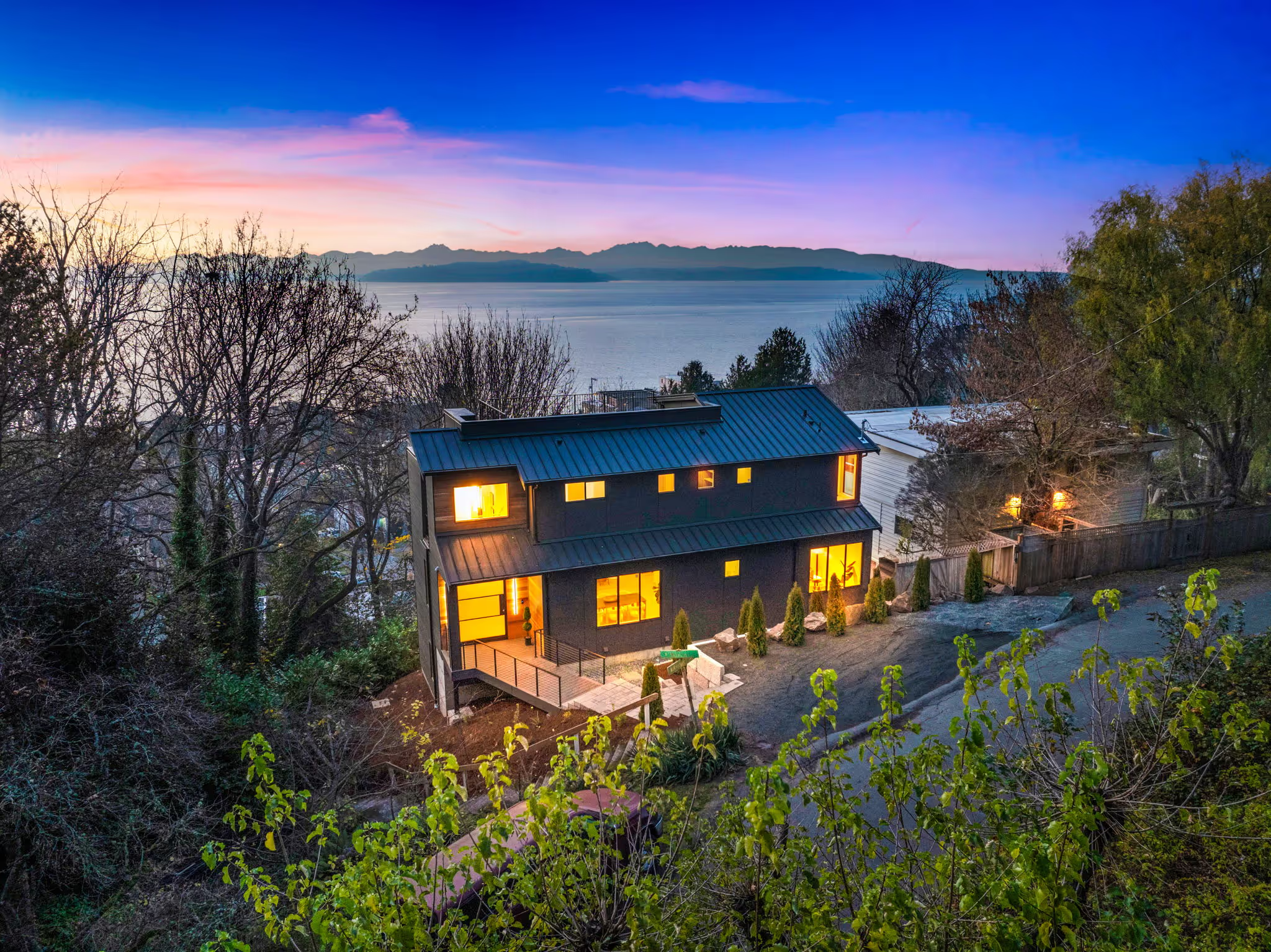

Buying Land to Build a House on Seattle’s Eastside: Feasibility, Permits, and Red Flags to Watch For
Beautiful property doesn't usually come cheap. The key is making sure it doesn't turn out to be expensive for all the wrong reasons.
On Seattle’s Eastside, the wrong lot can quietly saddle a project with avoidable delays, design compromises, unexpected site costs, and months of permitting friction before construction even begins.
The view may be stunning. The address may be perfect. But if the land can't support the home you want, in the way you want to build it, that “dream lot” can become a very costly detour.
That is why buying land to build a house is not just a real estate decision. It is an early development decision. You want a property that supports your vision, protects your investment, and gives your builder and design team a clear path forward.
This quick guide helps you make the smart decisions early, so your property lends itself to exactly the home you want.
Why Buying Land for a Custom Home Carries More Risk Than Most Buyers Expect
Land looks simple from the outside. In reality, it is where a great many luxury home projects either gain momentum or quietly inherit risk.
A polished listing can make a property feel more straightforward than it really is. Buildability, access, grading, utility availability, setbacks, drainage, and permitting conditions often tell a more important story than the photos do.
A lot is not valuable just because it is attractive
What makes land valuable for a custom home is not only location, privacy, or view potential. It is whether the site can actually accommodate the home, layout, and experience you want without forcing major compromises.
That is a different question than whether the property is desirable in the abstract. And it is the question that matters most.
Luxury buyers are buying potential, not just dirt
When you are investing in a custom residence, you are really buying the ability to create a particular way of living.
You may want seamless indoor-outdoor entertaining, a private arrival sequence, a guest suite, expansive glazing, a wellness space, or a main-level primary suite. The land has to support those priorities. If it does not, the project may still move forward, but with more tradeoffs than expected.
Start with the Home You Want Before You Fall in Love with the Lot
This is where many buyers get the sequence backward. They find a property first, then try to force a vision onto it later.
A better approach is to define the lifestyle and scale of home you want before you commit. That gives you a much clearer lens for evaluating land.
Clarify the non-negotiables
Think in terms of how you want to live, not just how many square feet you want to build.
Do you want privacy from neighboring homes? A flatter backyard for entertaining? A dramatic approach and entry sequence? Room for a detached structure? Better sun exposure? Fewer stairs over time? Those priorities will shape what kind of lot actually fits.
Set a realistic total investment range
The purchase price is only one part of the decision.
Two lots with similar asking prices can produce very different total project costs once grading, retaining, utility work, structural engineering, access constraints, and permit complexity come into play. That is why disciplined buyers look at land cost and site-development implications together.
For a broader planning baseline, see what it costs to build a custom home on Seattle’s Eastside.
What Makes a Lot Truly Buildable?
This is the central question when buying land to build a house. And it is where early builder involvement can save buyers from expensive assumptions.
A buildable lot is not simply a lot where something can be built. It is a lot where the right home can be built with an acceptable level of cost, complexity, and compromise.
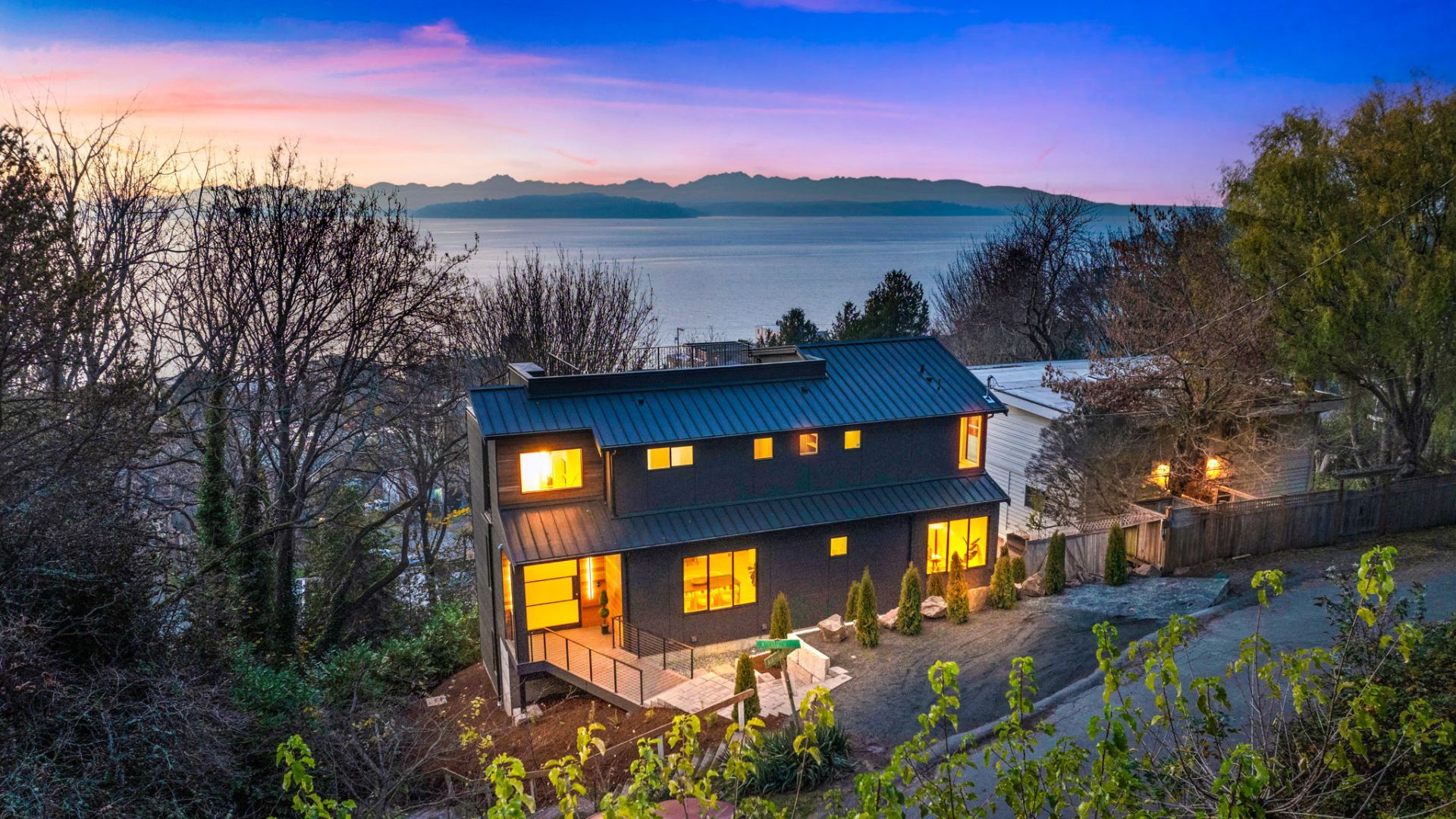
Topography and slope
Slope affects far more than the foundation.
It can influence excavation scope, retaining needs, drainage strategy, access during construction, driveway design, and the way the house itself must be organized. A sloped site can absolutely produce a spectacular home, but it changes the equation.
Our guide to building a waterfront or hillside custom home on Seattle’s Eastside explains how complex properties can affect design, engineering, permitting, access, and cost.
Setbacks and usable building area
A property can look generous on paper and still offer a smaller practical footprint than expected.
Required setbacks, easements, buffers, and site constraints can reduce the area where the house, driveway, outdoor spaces, and supporting elements can realistically go. That is why lot size alone rarely tells the full story.
Access and construction logistics
Some properties are challenging not because of the home they allow, but because of the difficulty of building on them.
Driveway placement, staging space, site access, neighboring conditions, and construction circulation can all affect complexity and cost. These are easy issues to miss if you are only thinking like a buyer and not yet like a builder.
Utilities and drainage
Utilities can be straightforward or surprisingly complicated.
Water, sewer, stormwater handling, power access, and related infrastructure can shape both schedule and budget. This is one of the clearest examples of why “can build” and “can build smoothly” are not the same thing.
Eastside Feasibility Issues to Check Early
Seattle’s Eastside offers some of the most desirable custom-home opportunities in the region. It also comes with site and review conditions that reward early diligence.
This is where experienced local guidance makes a real difference. The goal is not to overcomplicate the search. It is to uncover the right questions before a property becomes a commitment.
Shoreline and sensitive-site constraints
Lots near water or environmentally sensitive areas can carry additional layers of review and design limitation.
That does not make them bad opportunities. In many cases, those are the very properties that can become extraordinary homes. But they do need a clearer-eyed feasibility conversation earlier in the process.
Jurisdiction matters more than buyers expect
A property’s city or review authority can influence the rhythm of approvals, the level of documentation required, and how smoothly the project moves toward permit issuance.
That is why local experience matters. Polaris’s process messaging rightly emphasizes Eastside jurisdiction experience, proactive tracking, and coordinated documentation because those issues often affect timeline long before the build begins.
Site conditions can reshape the budget quietly
The biggest cost drivers are not always obvious during a first walkthrough.
A lot may appear clean and promising, yet require more site work, engineering coordination, drainage planning, or structural response than the buyer assumed. Early feasibility is what turns those unknowns into informed decisions.
For example, our modern luxury custom home in Clyde Hill required 92 pin piles to create the foundation support needed for a substantial residence on that property.
Permits and Approvals: What Buyers Need to Know
Permitting is one of the least visible parts of the process and one of the most important. Buyers who ignore it early often feel the consequences later.
A smart land purchase accounts for permitting risk before the property is under contract, not after plans are already deep in design.
Permitting affects the real timeline
Many buyers think first about construction duration. But the path to breaking ground often begins much earlier.
Review cycles, documentation, consultant coordination, revisions, and jurisdictional requirements can all shape how long it takes to move from property purchase to active construction. Our guide to the custom home building timeline on Seattle’s Eastside shows where permitting fits into the full path from early planning to move-in.
The best time to reduce permit friction is before design gets too far
Permitting problems are often easier to prevent than fix.
When feasibility, site realities, and jurisdictional expectations are addressed up front, the design and engineering team can move with more clarity. That usually leads to fewer surprises and a smoother path to approvals.
The Biggest Red Flags to Watch For Before You Buy
This is where a little discipline can save a great deal of money.
The goal is not to become overly cautious. It is to spot the warning signs that deserve a closer look before emotion takes over.
The lot looks big, but the buildable area feels tight
This is one of the most common disconnects in land buying.
A listing may advertise size, privacy, or width, but the usable area for the actual home and site features may be more constrained once setbacks, slope, access, and buffers are taken seriously.
The seller or listing implies certainty without real due diligence
Optimistic assumptions are not the same as verified feasibility.
If key claims are not backed by documentation, consultant input, or experienced builder review, treat them as possibilities rather than facts. This is especially important when the property is being sold on potential.
The site will require more intervention than it first appears
Steep grading, retaining, drainage management, awkward access, or unusual site-development requirements can change the economics of the project quickly.
That does not always kill the deal. It simply means the lot should be evaluated in light of the home you want and the total investment you are willing to make.
The budget only accounts for the land and the house
This is a subtle but important red flag.
The most disciplined buyers think in terms of total project cost from the start: acquisition, soft costs, permitting, design, engineering, site work, and the home itself. That broader view leads to better choices.
How a Builder Can Help Before You Purchase Land
This is where experienced buyers gain an advantage. They bring in builder insight before they need rescue.
A strong builder does not just show up after the lot is purchased and the drawings are underway. The right one helps you understand the opportunity before you are committed.
If you’re still comparing firms, these 12 questions can help you choose the right custom home builder on Seattle’s Eastside.
Site visits add clarity early
A builder sees a lot differently than a buyer does.
They can often spot access issues, sequencing concerns, site-development implications, and design limitations early enough to influence the decision. Polaris explicitly positions site visits and feasibility insights as part of its process for exactly this reason.
Feasibility guidance helps protect the vision
It is one thing to ask whether a home can be built. It is another to ask whether your home can be built well on that property.
That distinction matters. The right early guidance helps buyers avoid paying a premium for a lot that will never truly support the lifestyle or level of finish they want.
Early builder input keeps design and budget aligned
This is one of the biggest advantages of involving your builder before closing.
When the land, the vision, and the budget are considered together from the beginning, the project starts with more alignment and less rework. That idea sits at the heart of Polaris’s Design-Build Plus process.
Buy with More Confidence from the Start
The right property can unlock an exceptional custom home, shaped around the site as well as the people who will live there.
The wrong one can quietly add compromise, delay, and cost before the project has truly begun.
That is why buying land to build a house on Seattle’s Eastside deserves more than a quick walkthrough and a hopeful assumption. It deserves a feasibility-first approach.
When your builder helps evaluate the lot early, you gain something far more valuable than a faster answer. You gain clarity. And for high-stakes custom projects, clarity is what protects your time, your budget, and the quality of the home you are trying to create.
If you are evaluating land on the Eastside and want an experienced perspective before you commit, book a consultation with Polaris Construction.
FAQs
How do I know if land is buildable?
You need to look beyond the listing and evaluate topography, setbacks, access, utilities, drainage, and jurisdictional requirements. A lot may be technically buildable but still be a poor fit for the home you want.
Should I talk to a builder before buying a lot?
Yes. Early builder input can help you understand feasibility, site-development implications, and likely project risks before you commit to the property.
What are the biggest red flags when buying land to build a house?
Common red flags include limited usable building area, steep slope, difficult access, unclear utility conditions, optimistic seller assumptions, and a budget that does not account for site-development realities.
Can permits affect the project before construction starts?
Absolutely. Permitting and approvals often shape the timeline long before ground is broken, especially on more complex or sensitive sites.
Is a teardown easier than vacant land?
Sometimes, but not always. A teardown can offer infrastructure and location advantages, but it can also come with its own site, permitting, and design constraints that still need careful review.